Small Apartment Organizing Ideas: 12 Renter-Friendly Systems for Tiny Homes
Small apartment organizing ideas that work in real studios: zones instead of rooms, vertical storage, the entryway drop zone, dual-purpose furniture and no-drill renter tricks.
- Think in zones, not rooms — every item needs one address in under 600 sq ft.
- Go vertical: walls hold more than floors in a tiny home.
- Dual-purpose furniture (storage ottoman, drop-leaf table) earns its footprint.
- Declutter before buying storage — containers organize clutter, they don't remove it.
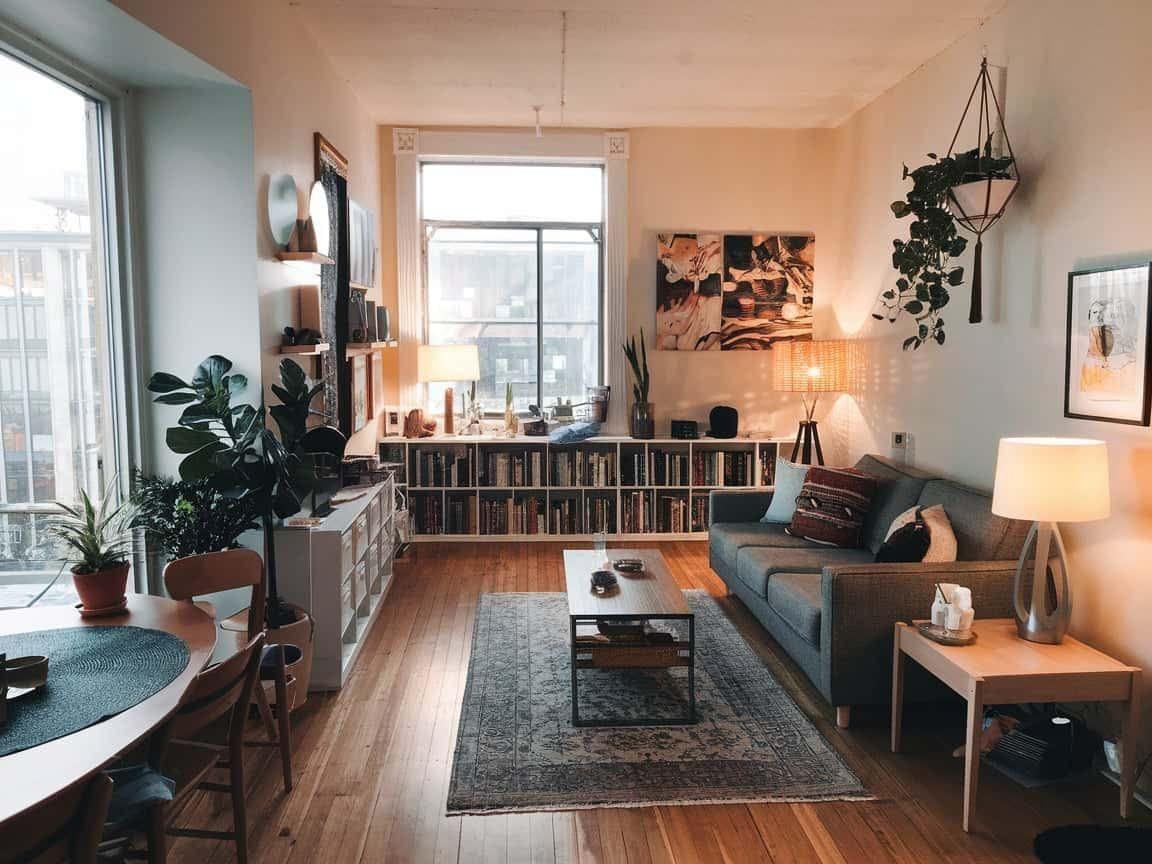
Warm small apartment living room with low bookshelves, plants and a tidy sofa
Under 600 square feet is not a storage problem — it is a systems problem. These small apartment organizing ideas were tested in real studios and one-bedrooms, and each one answers the only question that matters in a tiny home: where does this live? If you are learning how to organize a small apartment without drilling holes or buying a storage unit, start with zones, go vertical, and declutter before you containerize.
Small apartment organizing ideas that work: zones, not rooms
In a tiny apartment, rooms do not exist — zones do. A sleeping zone, a working zone, a relaxing zone, each with its own small set of belongings and its own storage. When an item has no zone, it becomes clutter by default. Walk your home and name the zones out loud; every storage decision after that gets easier. This single mindset shift does more than any product on this list.
Go vertical or go home
- Use the wall above sofas, desks and doors — the top 30 cm of any room is free storage most renters ignore.
- Choose tall, narrow shelving over wide, low units; same capacity, half the footprint.
- Hang daily-use items (bags, headphones, remotes) on hooks and pegboards so surfaces stay clear.
The entryway drop zone
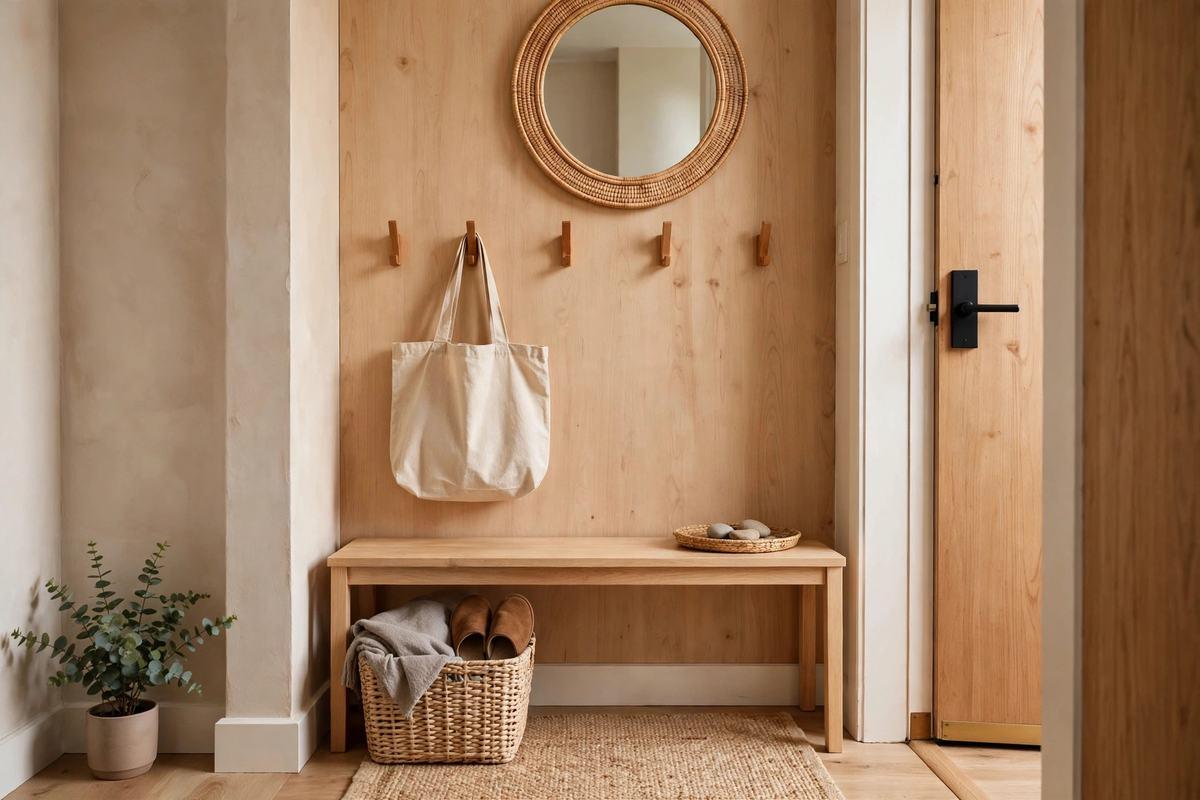
Small homes fail at the door: keys, mail and bags explode inward. Even in a hallway-less studio, a single tray plus two hooks by the door creates a drop zone that catches the chaos before it spreads. Of all tiny apartment organization ideas, this one takes an hour and changes every single day — because the entryway is the only zone you touch twice daily.
Furniture that works two jobs
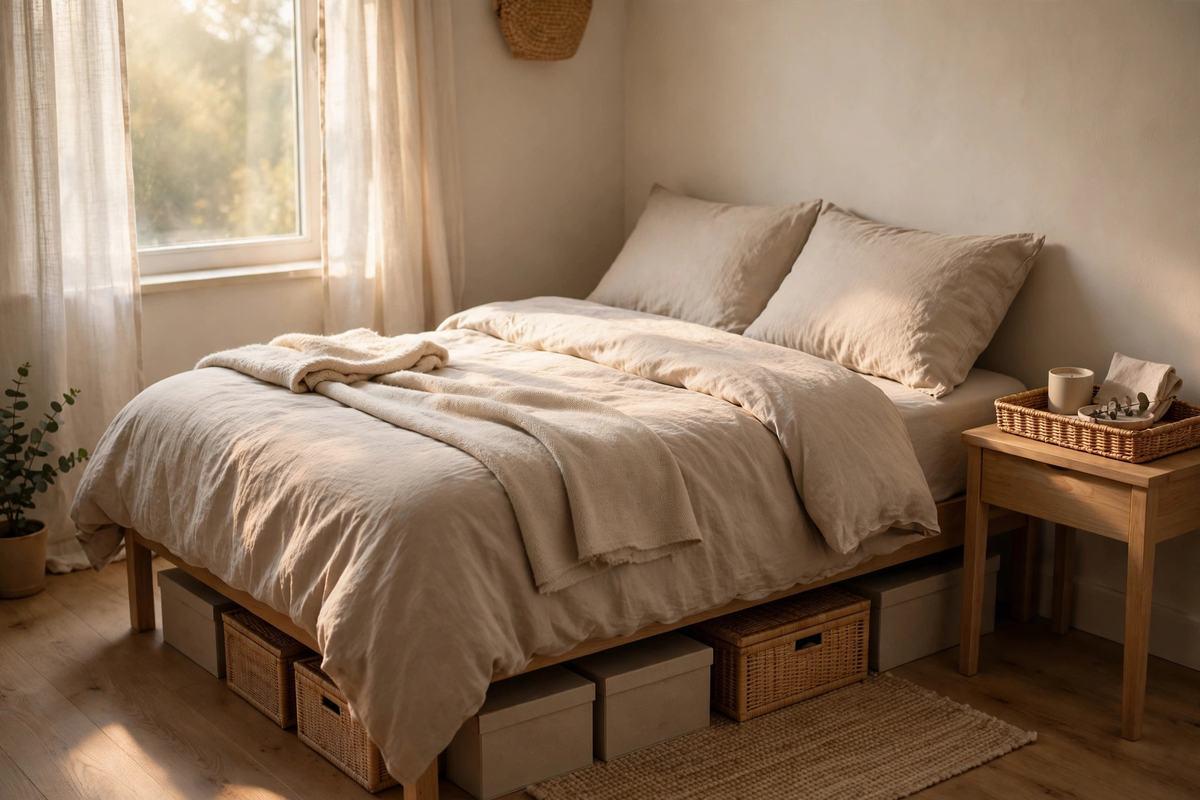
Storage ottomans, lift-top coffee tables, beds with drawers. In small space organizing, every large piece should hide something. When replacing furniture, "does it store?" comes before "is it pretty?" — and the right piece does both. A storage ottoman at the foot of the bed, for example, swallows bedding, board games or off-season clothes while serving as seating.
Clear surfaces, calm brain
Aim for 80% clear counters and tables. Keep daily items in one tray or basket per surface — visually one object, functionally everything. This is the stylist's secret behind every "small space, pretty solution" photo: grouping, not hiding. Corralled clutter reads as intentional; scattered clutter reads as chaos.
Renters: the no-drill toolkit
- Adhesive hooks and holders rated for the item's weight — check the rating, most failures are overload, not adhesive.
- Over-door racks for towels, shoes and cleaning supplies.
- Tension rods inside cupboards and under sinks for spray bottles and wraps.
- Magnetic strips on walls and fridge sides for remotes, knives and tools.
None of these need a drill, all survive a tenancy, and together they answer the hardest part of renter friendly apartment organization: storage you are actually allowed to install.
Buying storage vs. decluttering first — an honest comparison
The instinct is to buy baskets, then fill them. That is backwards, and it is the most expensive mistake in small apartment organizing. Containers bought before the edit get filled with things you would have donated — you have just paid to keep clutter tidier.
Decluttering first wins on every axis: you buy fewer containers, the ones you buy fit what remains, and maintenance drops because there is simply less to maintain. The one-in-one-out rule then keeps it honest: a new sweater, mug or gadget enters only when an old one leaves. Edit first, contain second, maintain with one-in-one-out.
Three mistakes that keep tiny homes chaotic
Organizing without zones. Random tidying moves clutter between rooms. Zones give every item a home address.
Ignoring the top third of every wall. Floor space is finite; wall space above eye level is almost always empty. That is where seasonal and rarely-used items belong.
One giant "miscellaneous" drawer. Every small home has one, and it becomes a black hole. Break it into small trays by category — batteries, tools, cables — or it will eat your scissors forever.
Frequently asked questions
- Where do I start organizing a small apartment?
- Start at the door. One drop zone and one clear surface create the first visible win, and momentum carries you into bigger zones like the closet and kitchen.
- How do I organize a small apartment on a budget?
- Spend first on the entryway and under-bed storage — baskets, hooks and labels cost little and give the biggest daily return. Declutter before buying any organizers.
- What is the biggest mistake when organizing a tiny apartment?
- Buying storage before decluttering. You end up organizing things you do not need in furniture you do not have room for.
- How can renters add storage without drilling?
- Adhesive hooks rated for the item's weight, over-door racks, tension rods inside cupboards, and magnetic strips on the fridge — all removable, all deposit-safe.