Rental-Friendly Fixes: 9 No-Drill Changes Your Landlord Will Never Notice
Renter-friendly no-drill upgrades that hold real weight and remove cleanly: 9 ways to hang, light and organize a rental with no holes and no deposit risk.
- Four systems cover everything: adhesive hooks, magnetic mounts, tension rods, over-door organizers.
- Know real weight ratings before you hang — packaging claims are optimistic.
- Wall prep (clean + cure time) is the difference between holding and falling.
- Three common mistakes ruin walls and deposits; the guide shows how to avoid each.
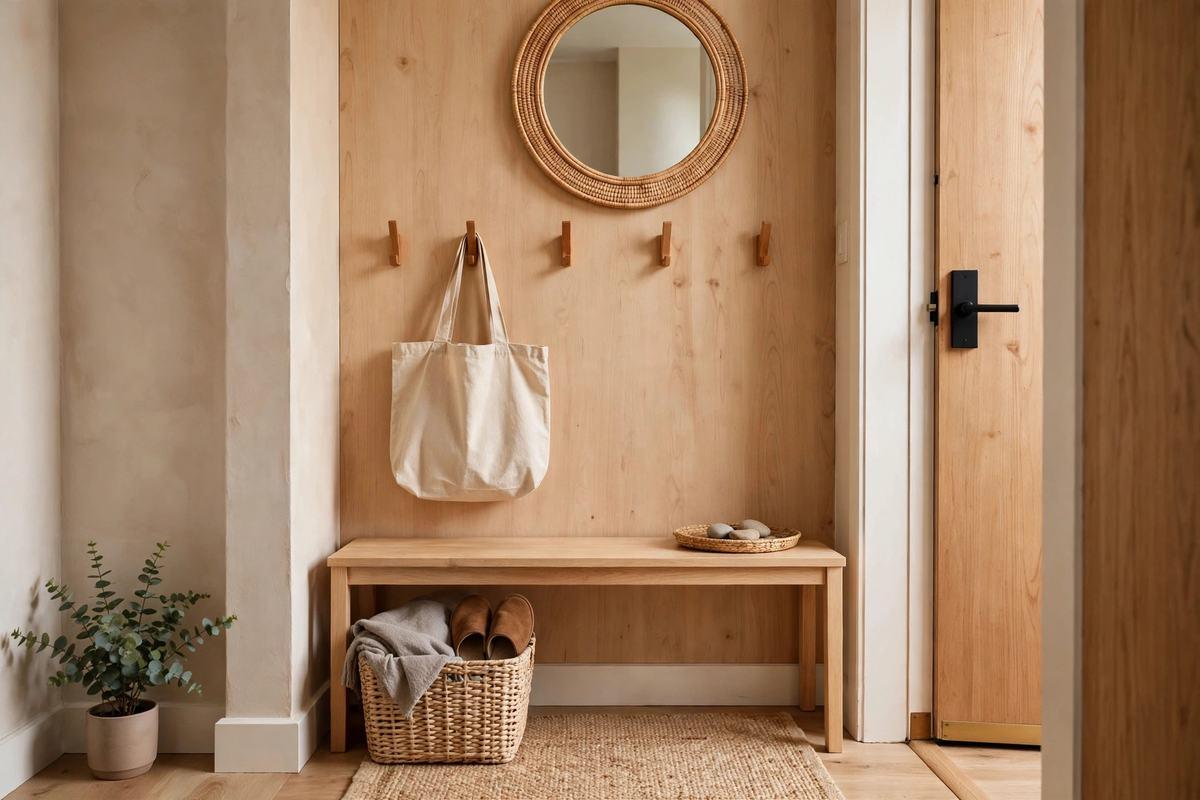
Organized rental living room wall with shelves, pegboard storage baskets and remotes in a basket
The renter-friendly no-drill changes that genuinely transform a rental come down to four systems: adhesive hooks, magnetic mounts, tension rods, and over-door organizers. Used properly, they hold real weight — keys, towels, robes, hair tools, even small shelves — and come off the wall without taking paint with them. This is how to hang things without drilling: exactly how to use each system, the mistakes that ruin walls, and nine deposit-safe fixes that make a rental feel owned.
Adhesive strips: the weight ratings and the prep ritual
A single small strip holds roughly 1kg; a large hook-and-strip set holds 2kg and up — but only on smooth, clean, fully cured paint. Ratings are per set, not per strip, so a hook with four strips does not hold four times what one strip holds. Read the package and believe it: those numbers are tested minimums, not marketing — and they are what make rental-friendly wall mounts genuinely practical for robes, handbags and hair tools.
The prep ritual is what separates removable mounting that holds for years from strips that drop your handbag at 3am. Wipe the spot with rubbing alcohol and let it dry completely — dust and grease are what the strip actually bonds to, not your wall. Press the hook to the wall for a full 30 seconds, then wait 24 hours before hanging anything. The 24-hour cure is the step almost everyone skips, and loading too soon is the number-one reason strips fail.
Adhesives also have hard limits. They fail on textured or bumpy paint, where the strip never fully contacts the surface; on wallpaper, which peels off at removal; on paint less than 30 days old, where the adhesive bonds to curing paint and takes it with it; and in constant steam unless the product is rated for wet rooms. If your bathroom fogs the mirror, buy the bathroom-rated caddies — the regular ones are not the same product.
Adhesive hooks vs tension rods vs over-door racks
Adhesive hooks win on smooth walls and tile where you want things exactly at eye level — robes by the bathroom door, keys by the entry, a hair dryer by the vanity. They lose wherever the surface is textured or damp, and they lose strength the moment you hang more than the rating allows. Removal is warm and slow: heat the strip with a hairdryer and stretch it off gently.
Tension rods win in any gap with two parallel walls — window frames, alcoves, between shower walls — holding curtains, spray bottles, or a makeshift plant shelf. They fail on wide spans with real weight, on walls that flex, and they can leave pressure marks if overtightened on soft paint. Felt pads on both ends prevent the scuffing; bowing is your early warning that the load is too heavy.
Over-door racks win on pure holding power, because the door itself carries the load — towels, cleaning caddies, tote bags, tomorrow's outfit. They fail on doors with thick padding, glass panels, or odd hinge clearances, and cheap ones rattle. Felt pads on the hooks fix both the rattle and the finish scuffs.
The rule of thumb: heavy weight goes over the door, precision placement goes on adhesive, and gaps between walls go to tension. Match the system to the problem and most rental "hacks" work exactly as advertised.
1–3: Hold everything, drill nothing
1. A magnetic remote holder. A slim magnetic plate stuck to the wall or the side of the console — remotes snap on and stop vanishing into sofa cushions. Zero holes, invisible from the doorway when placed on the console side, and it moves with you to the next flat.
2. Weight-rated adhesive hooks. Large sets rated 2kg and up take robes, handbags and hair tools on smooth paint; small strips handle keys, face masks and lightweight decor. Do the alcohol-wipe ritual, cure 24 hours, and never hang past the package rating — overloading is the second most common failure after skipping the cure.
3. Over-door racks. The strongest no-drill option in a rental. One rack on the bathroom door holds towels and a cleaning caddy; another on the bedroom door holds bags and tomorrow's outfit. Add felt pads so the hooks never scuff the door finish.
4–6: Light and power, upgraded
4. Motion-sensor LED lights. Rechargeable pucks with adhesive backs go under kitchen cabinets, in hallways and inside wardrobes. They make a rental feel renovated after dark for zero wiring — just recharge monthly, because a dead puck becomes decoration.
5. Adhesive cable channels. Run slim channels along skirting boards from socket to TV or desk and charger spaghetti disappears. White or paint-matched channels blend into most rentals; press the whole channel during install, not just the ends, so it sits flush.
6. A plug-in picture light. A battery or plug-in light above your art or a mirror gives the gallery look without an electrician. Center it carefully and tuck the cable behind the frame — the trick is hiding the wire, not the light.
7–9: Surfaces that fake 'built-in'
7. Tension-rod shelving. A tension rod across a window frame or alcove becomes a plant shelf; add a second rod underneath and you have hanging space for cloths or spray bottles. Keep spans modest and weights balanced — rods bow before they fall, and bowing is your early warning.
8. Peel-and-stick panels. Wood-look or tile-effect panels behind the sink, or a full headboard wall, fake "built-in" instantly — no-damage apartment decorating at its most convincing. Test a corner for a week first, apply only to paint older than 30 days, and remove slowly with a hairdryer — slow heat, slow peel, no paint lost.
9. A pegboard command wall. A small pegboard hung on four large adhesive strips becomes a command wall for keys, headphones, remotes and tools — everything visible, everything in reach, zero holes. Our favourite organizing idea in this whole magazine — and proof that renter-friendly upgrades need no drill to feel permanent.
Three mistakes that ruin walls (and deposits)
Skipping surface prep. Dust, grease and bathroom film are what the strip bonds to instead of your wall. Alcohol wipe, press 30 seconds, cure 24 hours. No exceptions.
Overloading past the rating. Weight creeps up as you add "just one more thing" to a hook rated 2kg. If it sags, it was overloaded — redistribute the load across two hooks instead of blaming the product.
Mounting on fresh paint — or starting without before-photos. Paint needs 30 days to fully cure; strip adhesive bonds to curing paint and takes it off at removal. And photograph every wall before anything goes up. At move-out, warm slow removal plus those photos is the entire argument, won.
Renter-friendly no-drill upgrades: what they really protect
It is not just the deposit. Renter-friendly no-drill systems move with you to the next flat, rearrange in minutes, and let you experiment — the hook that fails by the TV can win by the bed. These no-drill apartment hacks make renting stop feeling temporary the day your walls start working for you, and not one of these lease-friendly ideas needs a landlord's permission slip.
Frequently asked questions
- Do adhesive holders really hold on painted walls?
- Yes, on smooth, fully cured paint — small strips hold around 1kg, large hook sets hold 2kg and up. Wipe the spot with rubbing alcohol, press for 30 seconds, and wait a full 24 hours before hanging anything; loading too soon is the most common failure.
- What about textured walls or wallpaper?
- Adhesives fail there — textured paint never lets the strip fully bond, and removal can peel wallpaper. Use over-door racks, tension rods and freestanding storage instead, or magnetic mounts on the fridge, washer, dryer or metal furniture sides.
- Will peel-and-stick panels damage walls?
- On fully cured, sound paint they remove cleanly, but always test a hidden corner first. Never apply them to paint less than 30 days old, and remove slowly with gentle warmth rather than yanking.
- Will my landlord notice any of this at move-out?
- Not if everything comes off warm and slow. Photograph every wall before you mount anything and keep the strips' packaging — before-photos end almost every deposit argument in the renter's favour.