Pantry Organization Ideas for Small Kitchens: Jars, Zones and the Door Rack Trick
Pantry organization ideas that make a small kitchen feel twice the size: decanting, zones by meal, clear jars and the over-door rack that adds a whole shelf you did not pay rent on.
- Decant only the daily five staples — decanting everything is a trap.
- Zone shelves by meal, not by package type, so cooking flows.
- The pantry door is a free shelf: an over-door rack adds storage you didn't pay rent on.
- Measure before buying jars, and practice first-in-first-out so nothing expires.
Small kitchen pantry organized with clear labelled glass jars on shelves
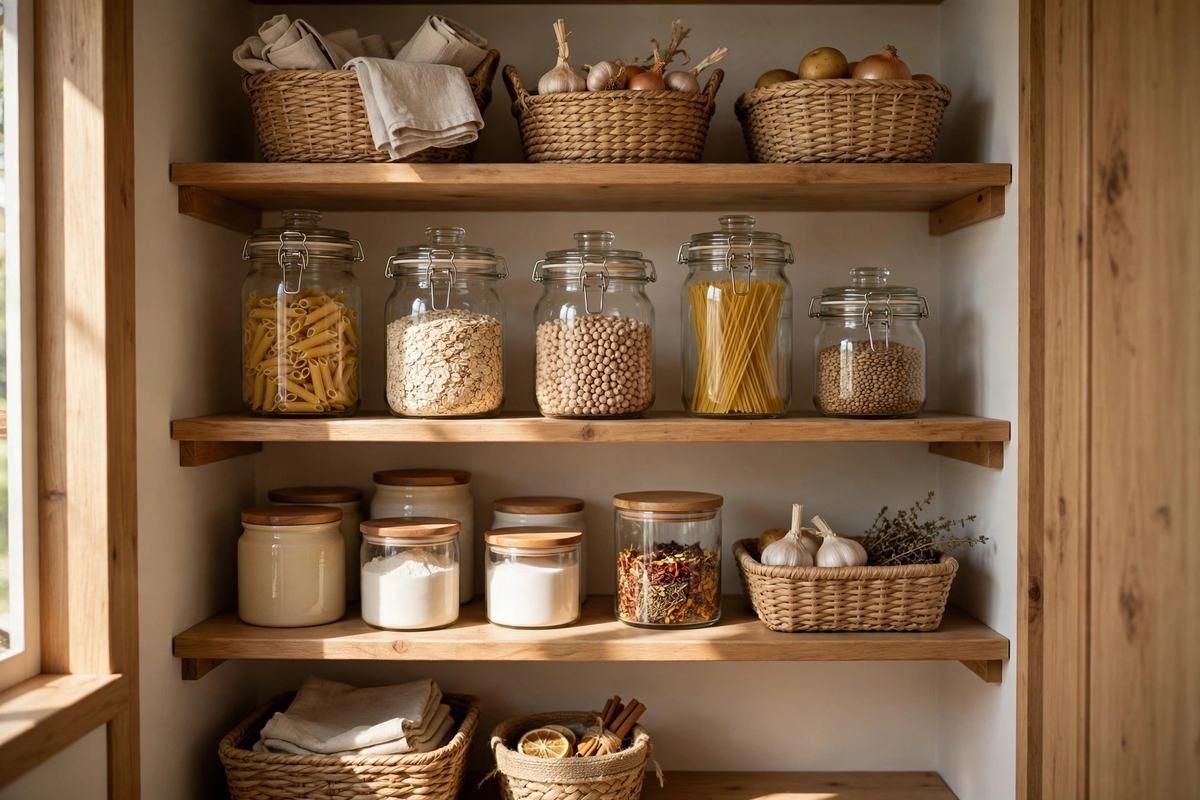
Here is the whole method in three moves: decant your daily staples into clear airtight jars so you can see levels at a glance, zone each shelf by meal instead of by package, and treat the pantry door as a bonus shelf with an over-door rack. These pantry organization ideas are the difference between a pantry you fight every evening and one that cooks with you.
Decant the daily five — and only the five
Flour, rice, pasta, oats and sugar. These five are the pantry's power players: you touch them constantly, they come in crinkly bags that never reseal, and they spill into corners. Pour them into clear jars with lids that actually seal — a silicone gasket or a clamp lid, not a loose bamboo disc — and three things happen. You see how much is left without opening anything. Staples stay fresher because this kind of airtight food storage keeps air and pantry moths out. And the shelf suddenly looks like a styled kitchen instead of a storage problem. Fifteen minutes of decanting buys you weeks of easy mornings.
But here is where most pantry makeovers go wrong: decanting everything. The full decant — every grain, every legume, every spice you bought in 2024 — looks beautiful on camera and becomes a maintenance nightmare within a month. Rarely used items need refilling, relabelling and re-dating, and every partial bag turns into a jar that is half-empty forever. The daily-five approach wins because it concentrates effort where the payoff is: high-turnover staples. Everything else stays in its original packaging, folded and clipped, and nobody's life is worse for it.
Measure first, then buy the jars
The most common small kitchen pantry organization mistake is buying a gorgeous matching set of containers before measuring the shelf. Standard kitchen shelves sit 30 to 40 cm apart, and that beautiful tall canister from the photo will not fit upright. Measure the shelf height, width and depth first, then shop for jars that fit the space with at least 5 cm of clearance above for easy lifting. Square jars beat round ones every time: they stack without gaps and use every corner of the shelf, while round jars leave wedge-shaped dead space between them. One shape, one lid type, repeated across the shelf — that is what makes a pantry look designed rather than accumulated.
Capacity matters too. A jar that holds a full new bag of flour plus a little breathing room means one container does the whole job. A jar that is slightly too small means a permanently half-open bag living next to the jar, which defeats the entire point.
Zone by meal, not by package
Most pantries are organized the way supermarkets are: baking things together, canned things together, snacks together. That is fine if you are shopping, but you are cooking. Of all the pantry storage ideas for small kitchens, rebuilding your kitchen zones around how meals actually happen pays off fastest: a breakfast shelf (oats, cereal, honey, tea and coffee within arm's reach of each other), a baking shelf (flour, sugar, leaveners, chocolate), and a dinner shelf (rice, pasta, oils, canned tomatoes, the spice cluster). At 7 p.m. you stop rummaging and start grabbing one zone.
There is a second payoff: zones make grocery lists write themselves. When the baking zone is visibly low, you know what to buy without opening every container. Grouping by meal also surfaces duplicates — the third open box of penne you did not know you owned — because everything that matters for one meal is finally in one place.
The door is a shelf you already paid for
Of all the small pantry organization hacks, the highest-value one is the over-door rack. Cabinet doors are dead vertical space; a rack with shallow wire shelves turns them into a full extra shelf that costs nothing in floor or cabinet space. Spices, wraps, oils, snack bars — everything flat and grabbable lives here. It is completely renter-friendly, installs with hooks over the top of the door, and moves with you. The rule for door storage is simple: only what you reach for daily. If an item lives on the door and you have not touched it in a week, it does not belong there.
Deep shelves: turn bins into drawers
Deep pantry shelves are where good food goes to be forgotten. Once you learn how to organize a small pantry with deep shelves, the fix is simple: stop treating the shelf as a shelf and start treating it as a drawer. Group items into open pull-out bins — one per category, maximum two per shelf — and pull the whole bin out like a drawer. Cans in one, packets in another, snacks in a third. The back of the shelf becomes reachable because the back of the bin comes to you.
Two details make this work. First, the bins must be opaque or open-top with a label facing out, so each category is obvious when you pull it. Second, resist the urge to over-bin: six tiny containers per shelf is harder to maintain than two generous ones. A simple rule — one bin per meal zone or category — keeps the system alive long after the reset energy fades.
Labels and the first-in-first-out habit
An organized pantry without a label system is a month away from being a disorganized pantry. Label every jar with contents and date, and every bin with its category. The date part matters more than people expect: flour goes stale, baking powder dies quietly, and 'decanted ages ago' is the reason pantry bugs start.
The companion habit is first-in-first-out: new stock goes behind the old. When the flour runs low, pour the fresh bag in and put the last of the old flour on top, or simply slide new cans behind old ones. This one habit ends the expired-jar surprise, and it takes zero extra time once the zones and bins are in place. It is the maintenance system that keeps the whole thing running on five minutes a month.
The three mistakes that make pantries fail again
If your pantry has collapsed before, it was probably one of these. First, buying containers before measuring the shelf — the tall canister that cannot stand upright, the wide bin that jams the door. Measure first, shop second. Second, decanting everything including the items you use twice a year — full decanting photographs beautifully and maintains terribly. Decant the daily five; leave the rest in its packaging. Third, deep shelves with no pull-out bins, so the back becomes a graveyard of half-used boxes and expired tins. And the quiet fourth: no label or date on anything, which means every jar eventually becomes a mystery and every mystery jar gets thrown out. Fix the measuring, shrink the decanting, bin the deep shelves, and date the labels — and the pantry stops needing rescue missions.
Pantry organization ideas: frequently asked questions
- What jars are best for a small pantry?
- Clear, airtight, and square — square jars stack and waste no shelf corners, while round jars leave dead space between them. Choose a lid that seals properly (silicone gasket or clamp), and label every jar with the contents and the date you decanted it.
- How do I organize a pantry with deep shelves?
- Turn bins into drawers. Group items in open baskets or clear bins by category and pull the whole bin out like a drawer, so nothing hides at the back. A two-bin-per-shelf maximum keeps the system simple.
- Is decanting worth the effort, or should I skip it?
- Only for the daily five: flour, rice, pasta, oats and sugar. These get used fast enough that a 15-minute decanting session buys you weeks of easy mornings. Rarely used items stay in their original packaging — decanting those is maintenance with no payoff.
- How often should I reset a small pantry?
- A five-minute check every month for expired items, and one full reset each season where everything comes out, shelves get wiped, and categories get re-zoned. The monthly check prevents the slow drift that ruins most pantries.