Microfiber Cleaning Cloths, Used Right: The Mistakes Making Your Home Dirtier
Microfiber cleaning cloths are the backbone of every home cleaning hack that actually works — unless you are washing them wrong. The complete guide to cloths, colours and care.
- Flat-weave cloths for glass and mirrors; plush cloths for dusting — using the wrong one streaks.
- Colour-code by room so bathroom germs never reach the kitchen.
- Never use fabric softener or dryer sheets — they coat the fibres and kill absorption.
- A cloth is dead when it stops absorbing; wash separately in hot water to extend life.
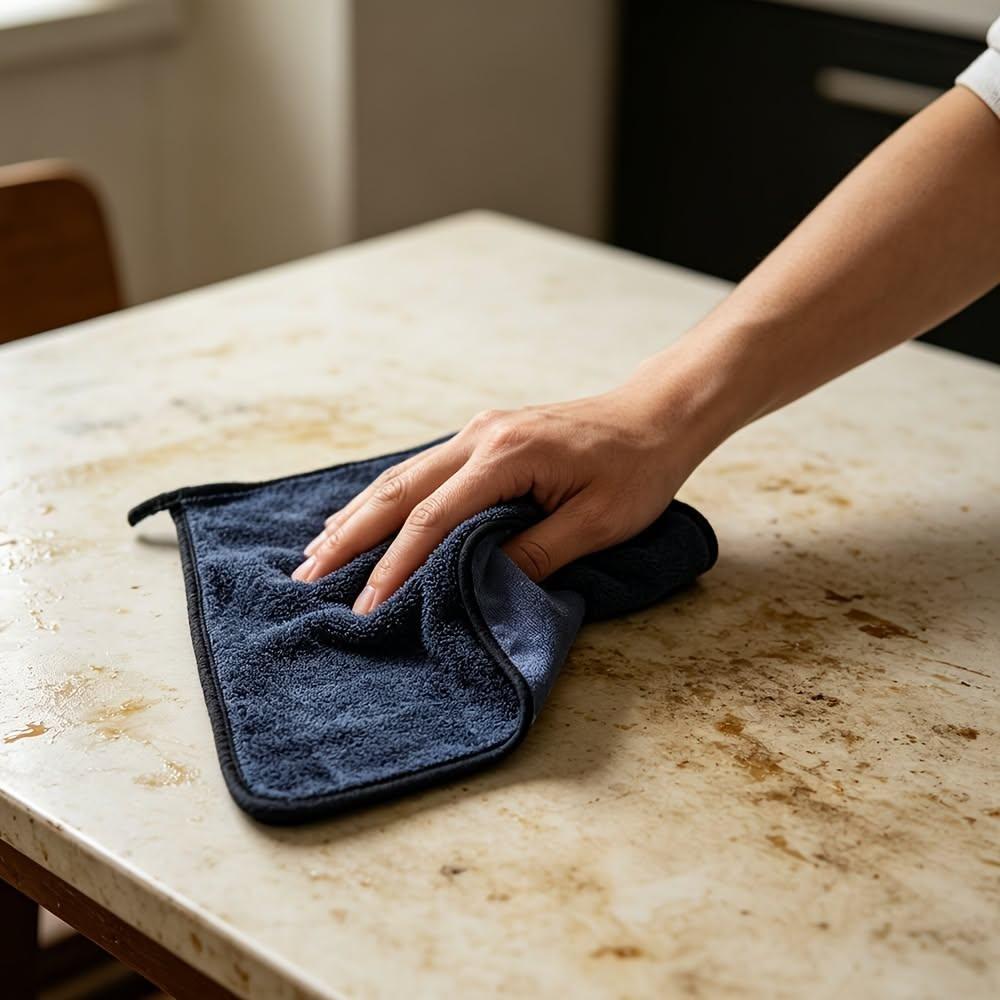
Hand wiping a stone kitchen counter with a navy blue microfiber cleaning cloth
To use microfiber cleaning cloths correctly: fold a clean cloth into quarters, use it barely damp for most surfaces and dry for dusting, assign one colour to each zone — kitchen, bathroom, glass, dusting — and wash cloths separately in warm water with no fabric softener or bleach, then tumble low or air-dry. Follow that routine and one folded cloth gives you eight fresh cleaning surfaces that grab dust through static charge; skip it and the same cloth just smears yesterday's grease across today's counter.
How microfiber actually works (and why cotton can't compete)
Microfiber is a blend of polyester and polyamide spun into fibres far thinner than a human hair — then split into star-shaped wedges during manufacturing. Those wedges act like tiny scoops: instead of pushing dirt across the surface the way a cotton rag does, they trap it inside the cloth until you rinse. Dry, the fibres build a static charge that pulls dust off dark furniture and baseboards with no spray at all. Rinse the cloth in water and the trapped dirt releases, because the wedge shape holds dust mechanically, not chemically.
This is why quality microfiber cleaning cloths leave glass clear and stainless steel streak-free while cotton leaves lint behind, and why they wipe out the weekly paper-towel spend at the same time.
Flat-weave vs plush: which cloth for which job
Not all microfiber is the same cloth. Flat-weave cloths — tight, smooth, often sold as microfiber cloths for glass — are built for reflective surfaces: mirrors, windows, screens, chrome. Plush cloths are thick and fluffy, with far more fibre surface for absorbency and scrubbing power.
My honest opinion after years of reading every cleaning test out there: flat-weave beats plush on glass every single time. Plush fibres shed tiny lint threads onto reflective surfaces, and no amount of re-buffing fixes it — the lint just moves around. For the classic streaky-mirror problem, switch to a flat-weave cloth, use it barely damp with water only, and buff immediately with a second dry one.
Plush earns its keep elsewhere. A damp plush cloth with a single drop of dish soap cuts through a greasy stovetop far better than flat-weave, which has nothing to absorb the grease with. And two newer formats use the same fibre logic at bigger scale: reusable mop pads that hook onto flat mops for floors, and washable towel rolls — perforated sheets that snap together — that replace paper towels for spills.
The colour system that keeps bathroom germs out of the kitchen
The professional microfiber cloth colour code is simple and worth copying exactly: blue for glass and mirrors, green for kitchen counters and appliances, yellow for dusting, pink or red for the bathroom. The non-negotiable rule: the cloth that touched the toilet never touches a food surface. This one system does more for household hygiene than any 'natural' spray.
Buy eight cloths to start — two per zone. That way a clean set is always on hand while a laundry load runs. And always fold a cloth into quarters before you wipe: each fold exposes a fresh face, giving you eight clean surfaces per cloth instead of smearing with the same dirty square all afternoon.
The three mistakes that ruin good microfiber
Mistake 1: one cloth for the whole house. Wiping the bathroom sink and then the kitchen counter with the same cloth is how germs travel. Colour-coding exists to make this impossible to get wrong.
Mistake 2: fabric softener in the wash. Softener — and dryer sheets — coats the split wedges with a waxy film that switches off the static grip and blocks absorbency. High dryer heat melts the polyamide fibres outright. A softener-soaked cloth feels fluffy and cleans like a wet sock.
Mistake 3: using them soaking wet on everything. Microfiber works best barely damp — wrung out so it feels cool, not wet. Excess water is the number-one cause of streaky mirrors and cloudy glass. The two-cloth method — one damp to lift the dirt, one dry to buff — beats one soaked cloth every time, especially on steel and dark counters.
Washing microfiber cleaning cloths: the routine that keeps fibres alive
Wash microfiber separately from cotton towels — cotton lint clogs the split wedges and undoes the whole point. Use warm water, never hot, and about half the detergent you would normally use, because heavy detergent builds up in the fibres too. No fabric softener, no bleach, no dryer sheets. Tumble on low or air-dry; high heat is what kills the fibres first. For grease-heavy cloths, like the stovetop one, rinse in hot tap water first so the machine load starts clean.
When is a cloth dead?
Even good care has a limit. After a proper wash, if a cloth stays stiff, still smells, leaves lint it never left before, or lets water bead instead of absorbing — the fibres are worn out. Retire it to garage, garden or pet duty and bring in a fresh microfiber cleaning cloth. A well-kept cloth lasts years of weekly washes; a softener-soaked one can die within months. That lifespan gap is the whole argument for washing them right.
Frequently asked questions
- Can microfiber really clean with just water?
- For dust, glass and light daily grime, yes — the split fibres and static charge do the mechanical work. Greasy stovetops need a drop of dish soap, and sanitising jobs still need the right product for the surface.
- Why do my mirrors streak even with microfiber?
- Two usual causes: the cloth is too wet, or it is a plush cloth leaving lint behind. Switch to a flat-weave glass cloth, use it barely damp, and buff immediately with a dry one.
- When is a cloth dead?
- If it stays stiff or smelly after a proper wash, or leaves lint it never used to, the fibres are worn out. Retire it to garage or garden duty — a well-kept cloth lasts years of weekly washes.