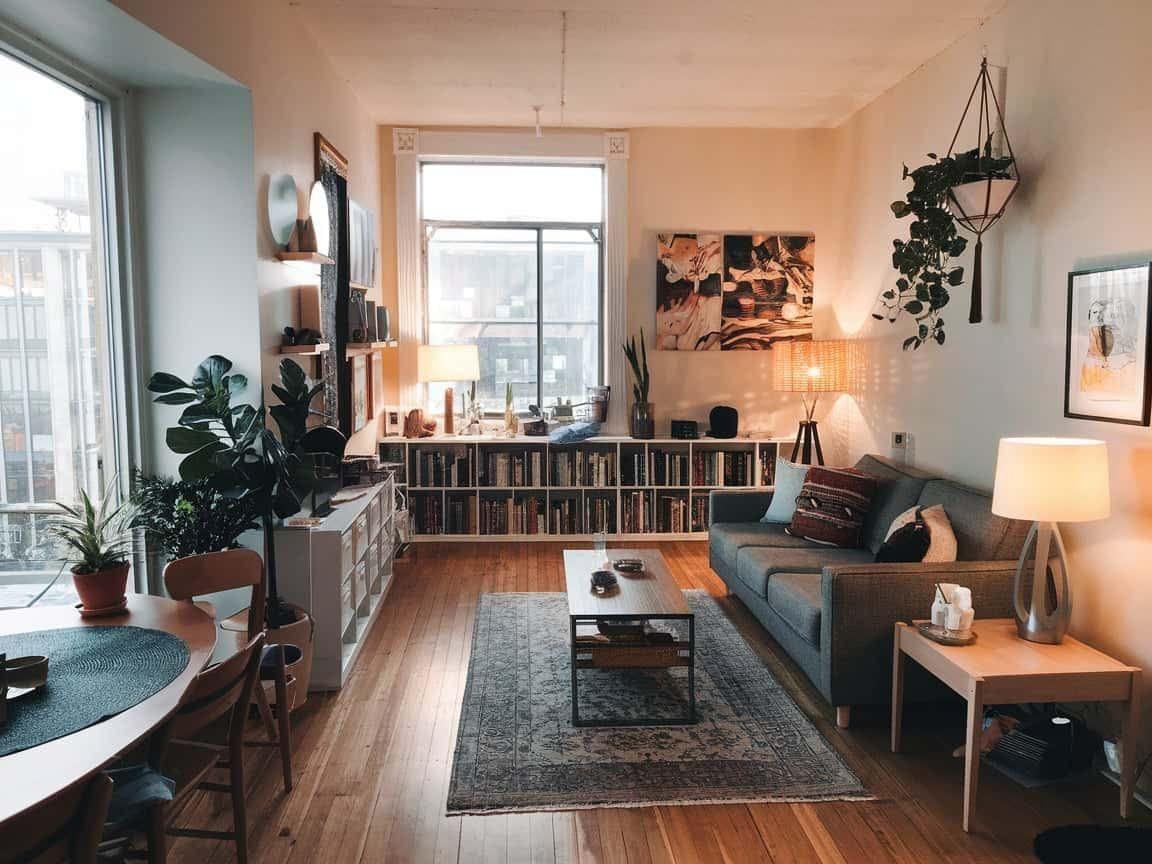
How to Hang Anything in a Rental Without Damaging Walls (7 Methods, Tested)
The honest guide to no-drill hanging: real weight limits, which walls each method works on, and the removal trick that saves your deposit.
- Seven tested methods with real weight limits: adhesive hooks hold ~7 lb, picture strips ~16 lb with four strips.
- Surface prep decides everything: clean with alcohol and wait 24 hours before loading.
- Warm-and-slow removal (hairdryer + pull along the wall) is what saves your deposit.
- Never use nails or strong adhesive on fresh paint or textured walls — test hidden spots first.
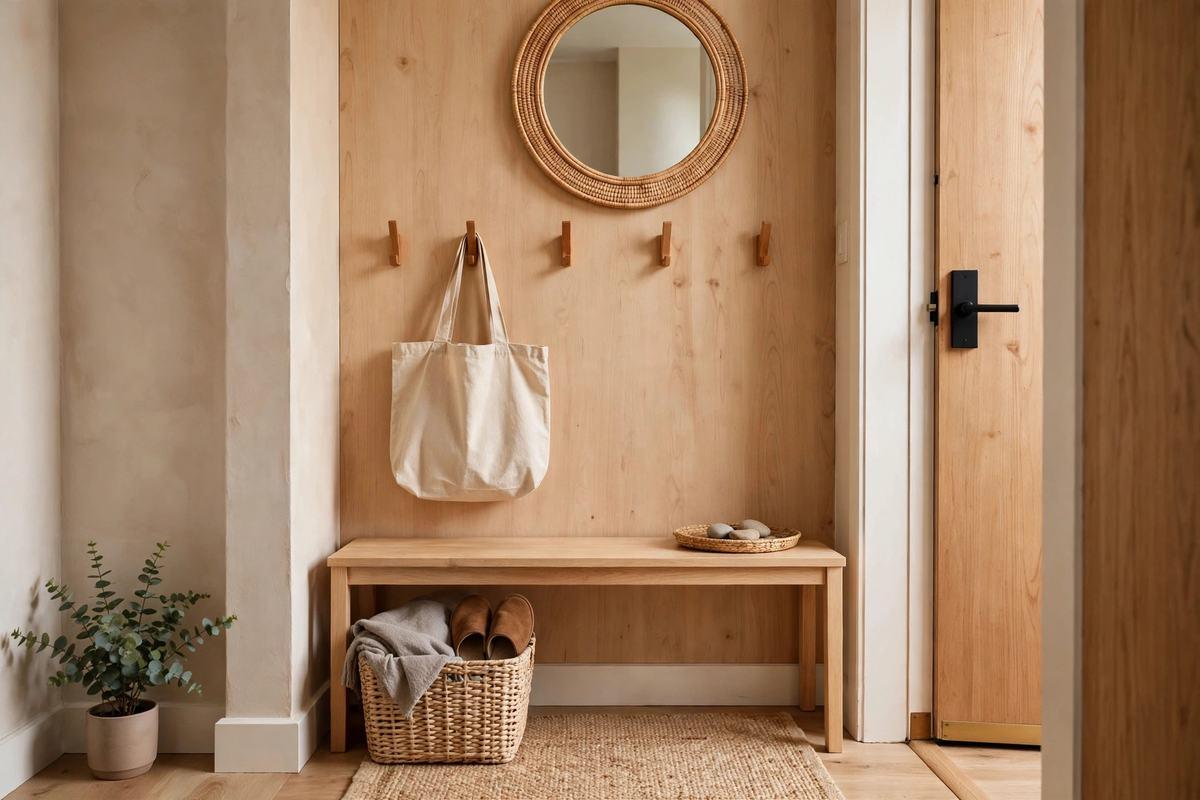
A full gallery wall, zero holes — adhesive strips and planning do the heavy lifting
Here is how to hang things without damaging walls in a rental: adhesive hooks for everyday items (up to 7 lb per large hook), adhesive picture strips for frames (up to 16 lb with four strips), tension rods for curtains, and over-door hooks for robes and bags. Every method below lists its real weight limit and the walls it fails on — because a method that rips paint off on removal is not damage-free, no matter what the packaging claims.
What actually counts as 'damage' in a rental?
Before the methods, the standard you are hanging against. Most leases prohibit 'damage beyond normal wear and tear' — and in practice, landlords and deposit disputes turn on one question: does the wall look the same as move-in day? A tiny filled nail hole is usually considered normal wear; a torn patch of paint where an adhesive hook ripped off is damage, and it is the kind that costs real money because it needs sanding, priming, and repainting — not a dab of spackle.
That is why 'no-drill' is not the same as 'no-damage'. The methods below are ranked by what they do to the wall on the way down, because removal is where deposits are lost. And always check your lease first: some leases explicitly allow small nail holes, which changes the math entirely.
Method 1: Adhesive hooks — the workhorse
The single most useful no-drill tool in a rental. Large adhesive hooks hold up to 7 lb each on clean, smooth, painted drywall — enough for robes, bags, kitchen utensils, wreaths, and light curtain panels. Medium hooks handle 3 lb (keys, hats, dog leashes); small ones about 1 lb.
Where they fail: textured walls, brick, concrete, and wallpaper — the adhesive needs a smooth surface to bond. They also fail in steamy bathrooms unless you buy the water-resistant versions, and they fail when you skip the prep: the wall must be cleaned with rubbing alcohol and the hook needs a full hour (ideally 24) to cure before you hang anything. Most 'these hooks are garbage' reviews are really 'I hung a wet towel 20 minutes after sticking it' reviews.
Removal: warm the base with a hairdryer for 30 seconds, then pull the tab straight down along the wall — slowly, stretching it. Never pull outward. Outward is what tears paint.
Method 2: Adhesive picture-hanging strips — for frames
For anything with a flat back — frames, canvases, mirrors under 16 lb — interlocking adhesive strips beat hooks. They sit flush, so frames hang flat against the wall instead of tilting forward, and weight is distributed across multiple contact points. Use four strips (two pairs) for anything over 8 lb.
Where they fail: same smooth-wall requirement, plus one more: they do not love heavy textured frames with uneven backs. And they are single-placement — repositioning means new strips. Plan gallery walls on the floor first: lay the frames out, photograph the arrangement, then transfer it to the wall with painter's tape outlines. Measure twice, stick once.
Removal: same slow downward tab pull, one strip at a time. For a frame with four strips, support the frame's weight as the last strip releases so it does not swing and scuff the wall.
Method 3: Tension rods — curtains and so much more
A tension rod inside a window frame holds light to medium curtains with zero wall contact at all — the spring pressure does everything. But the underrated uses matter more in a rental: a tension rod under the sink creates instant cleaning-supply storage, one inside a closet adds a second hanging tier for short items, and a short rod in a cabinet organizes cutting boards and trays vertically.
Where they fail: heavy blackout curtains on wide windows — the rod bows and eventually slips. For windows over 48 inches with heavy fabric, use two rods or switch to adhesive curtain brackets (method 4). Also, tension rods need solid side surfaces; crumbly old plaster window frames can crack under the pressure.
Method 4: Adhesive curtain-rod brackets — for real drapes
When you want proper curtains that actually frame the window — rod mounted on the wall above the frame, not squeezed inside it — adhesive curtain brackets rated for 10+ lb are the rental answer. Two brackets hold most standard curtain panels; use a center support bracket for spans over 60 inches.
The honest caveat: this is the highest-stakes adhesive application in the guide, because a falling curtain rod at 2 a.m. is memorable. Buy brackets rated for at least double your curtain weight, cure for the full 24 hours, and test with a gentle downward tug before trusting them. Sheers and linen panels are ideal candidates; heavy velvet blackouts are not — lean those toward tension rods or accept the lean-and-drape styling instead.
Method 5: Over-door hooks — the zero-wall option
Over-door hooks touch no wall at all, which makes them the only method with literally zero damage risk. Modern versions hold 10–15 lb across 3–5 hooks: robes, towels, bags, coats, tomorrow's outfit. They are also the fastest win in the guide — unbox, hang over the door, done.
The catch: cheap ones rattle and scratch door tops. Look for foam-padded brackets, and check your door clearance first — if the door already scrapes the frame, an over-door hook will make it worse. They also only work where you have a suitable door, which limits placement.
Method 6: Lean, stack, and style — skip hanging entirely
The most damage-free hanging method is not hanging at all. Large art and mirrors look intentional leaned on a mantel, dresser, console, or even the floor against a wall — it is a legitimate styling choice, not a compromise, and interior designers do it in owned homes too. Floating shelves that lean (ladder shelves) give you vertical display with zero wall contact.
When it works best: heavy mirrors and oversized art — the exact pieces that are hardest to hang safely with adhesives. A 20-lb mirror that would need six hooks and a prayer becomes a non-event leaned on a dresser. Secure the top with a discreet adhesive bumper so it cannot slide.
Method 7: The tiny-hole compromise — monkey hooks and picture hangers
Honesty requires including this: for heavy items on drywall, a 'monkey hook' style picture hanger (the wire that curves into the wall) makes a hole the size of a pinhead and holds up to 35 lb. The hole is genuinely tiny — one dab of spackle, invisible. Many renters use these for the one or two heavy pieces and adhesives for everything else.
The judgment call: this is only 'no damage' if your lease treats small nail holes as normal wear, which many do but not all. Read the lease. If it explicitly forbids holes, stick to methods 1–6. If it is silent or permissive, this is the pragmatic answer for heavy mirrors.
Weight limits at a glance
Before matching a method to an item, keep this cheat sheet handy — every number below comes from what these products are rated for on clean, smooth walls, not what the packaging wishes were true:
| Method | Holds up to | Best for |
|---|---|---|
| Adhesive hooks | Small: 1–3 lbs · Medium: 3–5 lbs · Large: up to 7 lbs | Keys, hats, small frames, robes and bags |
| Picture-hanging strips | 4–8 lbs per set (up to 16 lbs with four strips) | Frames and canvases with flat backs |
| Tension rods | 20–30 lbs | Light-to-medium curtains, under-sink storage, closet tiers |
| Adhesive curtain-rod brackets | 15–20 lbs on smooth surfaces | Proper drapes mounted on the wall above the frame |
| Over-door hooks | 5–10 lbs per hook | Robes, towels, bags — zero wall contact |
| Monkey hooks / tiny-hole hangers | Up to 50 lbs in drywall | Heavy mirrors and oversized art (check your lease first) |
The rule nobody follows: buy rated for at least 1.5–2× your item's actual weight. A 6-lb frame gets hooks rated for 12, not 7. Adhesive ratings assume clean, smooth, painted drywall at normal room temperature — textured walls, fresh paint, cold rooms and steamy bathrooms all cut real-world hold, sometimes dramatically. And weigh the item, don't guess: most people underestimate frame weight by half once glass is included.
The 2-minute surface prep that makes adhesive actually hold
Here is the pro step most people skip — and the reason most adhesive failures happen. Adhesive does not fail because the product is bad; it fails because the wall was not ready:
- Wipe with isopropyl alcohol (the 70% drugstore kind). One pass removes the invisible film of dust, skin oils and cleaning residue that stops adhesive from bonding. Water alone does not cut it — and household cleaners leave their own residue behind, which is worse.
- Let it dry completely. Sticking a hook to a damp wall traps moisture under the adhesive — give it a full minute. Do this in a steamy bathroom right after a shower and the bond starts compromised.
- Press and hold for 30 seconds. Firm, even pressure across the whole base — not just a fingertip tap in the middle — activates the bond. The quick slap-and-go is the step everyone skips, and it is the one that matters most.
- Wait one hour before hanging anything. Adhesive needs cure time to reach full strength. Overnight is ideal for heavy items; one hour is the minimum for light ones.
Two situations where even perfect prep fails: fresh paint (adhesive makers generally say to wait about a week after painting before sticking anything on) and cold walls in winter — adhesive bonds noticeably weaker below normal room temperature, so warm the spot with your hands or the room first. And skip the steamy-bathroom install unless the product is specifically rated water-resistant.
Do this once and you will stop blaming the product — nearly every 'these hooks are garbage' story is really a 'I skipped the prep' story.
Removal day: how to take everything down without a trace
Take everything down like this and the walls will look like move-in day:
- Warm the adhesive first. A hairdryer on medium heat for 30 seconds softens the bond so it releases instead of fighting you. Skip this on cheap hooks with no pull tab — heat plus slow peeling is their only clean exit.
- Pull the tab SLOWLY straight down. Stretch it along the wall, never toward you. Speed and an outward angle are what tear paint — patience is the whole technique. If a tab snaps, warm the base again and roll the remaining adhesive off with your thumb instead of scraping.
- Tension rods just untwist. No adhesive, no residue — twist to release the spring pressure and lift the rod out.
- Patch tiny holes with filler if you used Method 7. One dab of lightweight spackle, smoothed with a damp finger, is invisible once dry.
- Erase the evidence last. Any sticky residue comes off with rubbing alcohol on a microfiber cloth, and a plastic scraper (never metal) at a low angle handles stubborn spots. Then check every wall in daylight — residue hides under overhead bulbs but glows in raking window light, and that is exactly how landlords inspect.
How do you choose the right method for each item?
Match the method to the weight and the wall, in this order:
Under 3 lb on smooth walls (keys, small frames, hats): small or medium adhesive hooks. One hook, one minute, done.
Frames and canvases up to 16 lb: adhesive picture strips, four for anything over 8 lb. Flush, clean, no tilt.
Light curtains: tension rod inside the frame. Heavier curtains: adhesive brackets rated 10+ lb with a full 24-hour cure.
Robes, towels, bags: over-door hooks — zero wall risk, maximum convenience.
Heavy mirrors and oversized art: lean it. Seriously. Or, lease permitting, one monkey hook.
Anything on brick, concrete, or heavy texture: adhesives will disappoint you. Lean it, use a freestanding shelf, or hang from existing fixtures (a tension rod between two bookcases, hooks on a freestanding coat rack). Fighting the wall type is how deposits die.
What should you never use on rental walls?
A short blacklist, because these are the products that look harmless and are not:
Suction cups on painted or textured walls. They work on glass and glossy tile; everywhere else they fail suddenly — usually at night, usually onto something breakable.
Double-sided foam tape not rated for removal. The hold is excellent and the removal is catastrophic. If the package does not say 'removes cleanly' with a removal method, assume it does not.
Hot glue and super glue. Permanent. The paint is coming with it, and possibly the drywall paper.
Nails in old plaster. Plaster cracks and crumbles around nails in a way drywall does not. What would be a pinhead hole in drywall becomes a coin-sized crater in 1920s plaster. Adhesives only, on plaster.
How do you get the full deposit back at move-out?
Removal day is where this guide pays for itself. Work through every adhesive mount with the hairdryer-and-slow-pull method, then do the wall audit in daylight — adhesive residue shows up in raking light that overhead bulbs hide.
Residue: rubbing alcohol on a microfiber cloth removes most adhesive residue. For stubborn spots, a plastic scraper (never metal) at a low angle.
Tiny holes (if you used method 7): one dab of lightweight spackle, smoothed with a damp finger, sanded lightly when dry, touched up with matching paint. If you do not have the original paint, take a chip to the hardware store for a colour match — close enough is invisible at normal viewing distance.
Photograph everything. Before-and-after photos of each wall, dated, stored somewhere you will find them. In a deposit dispute, photos beat memory every time.
And the meta-lesson for your next rental: photograph the walls on move-in day too. Half of all deposit fights are about damage that was already there.
Frequently asked questions
- Can you hang heavy things in a rental without drilling?
- Up to about 7 pounds per hook with large adhesive hooks on clean, smooth walls. For heavier items like mirrors, use multiple hooks to split the load, or lean the piece on a mantel or shelf instead of hanging it.
- Do adhesive hooks damage walls when removed?
- Not if you remove them correctly: warm the adhesive with a hairdryer for 30 seconds, then pull the tab straight down along the wall, never outward. Pulling outward is what tears paint.
- What is the best way to hang pictures in a rental apartment?
- Adhesive picture-hanging strips for frames up to 16 pounds: four strips (two pairs) hold most medium frames on smooth walls. For gallery walls, plan the layout on the floor first with painter's tape outlines.
- Will landlords charge for small nail holes?
- Most landlords consider a few small nail holes normal wear, but policies vary. Tiny holes filled with spackle and touched up with matching paint are invisible in practice. Check your lease before assuming.
- How do you hang curtains in a rental without drilling?
- Use a tension rod inside the window frame for light curtains, or large adhesive hooks on the wall above the frame for heavier drapes. Adhesive curtain-rod brackets rated for 10+ pounds handle most standard curtains.
- What should you never use to hang things on rental walls?
- Avoid suction cups on textured or painted walls, hot glue, super glue, and double-sided foam tape not rated for removal. All of them either fail suddenly or take paint with them on the way down.
- How much weight can adhesive strips hold on a wall?
- One pair of adhesive picture-hanging strips typically holds up to 4 pounds, and a full set of four strips handles frames up to 16 pounds on clean, smooth walls. Always check the package rating and add an extra pair for anything heavy — more contact points mean a safer hold.